
 English
 عربى
عربى
Wholesale Two Tone Sound-Absorbing Panel


Two Tone Sound-Absorbing Panel Manufacturers
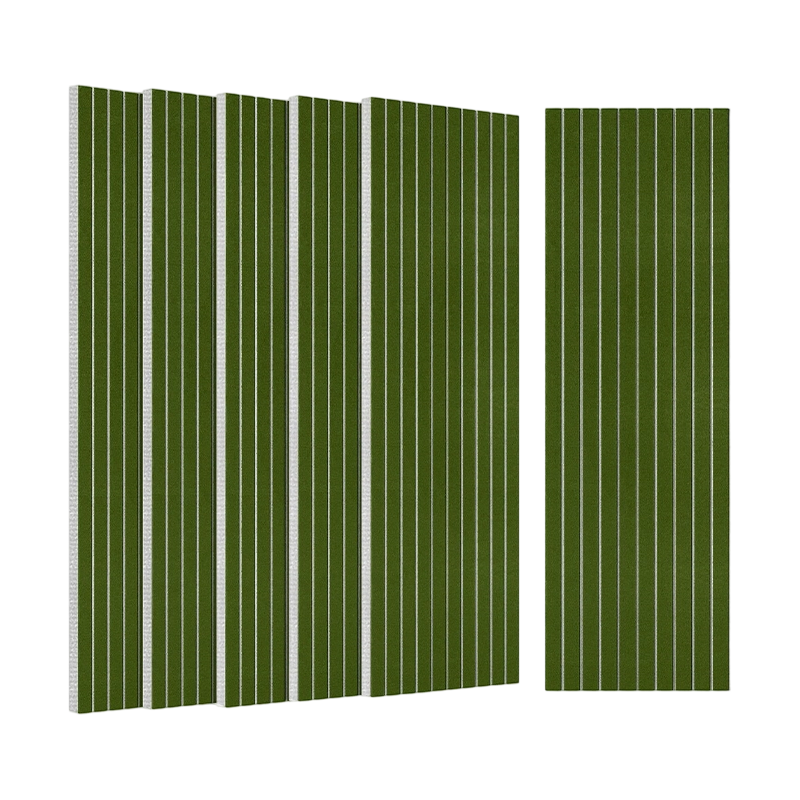

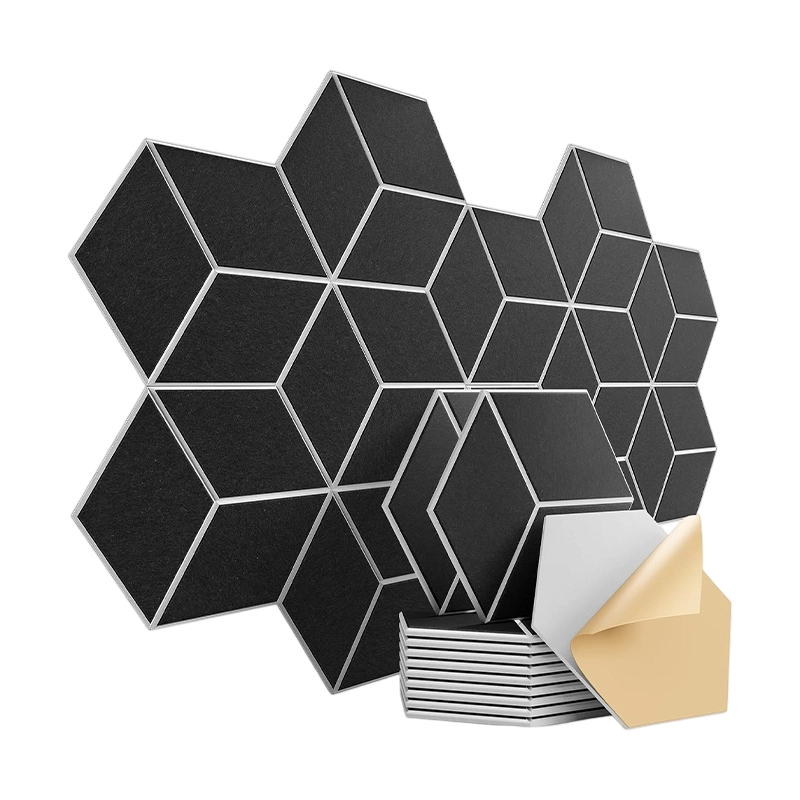
Printed acoustic panels deliver high-definition imagery directly onto a sound-absorbing substrate, merging branded visual communication with functional noise control. Using sublimation heat transfer and large-format digital printing technologies, photographic-quality images, corporate graphics, or custom artwork are permanently fused into the panel surface — resistant to fading, peeling, or distortion over time.
The base panel maintains the full acoustic performance of high-density polyester fiber, including broadband NRC values, Class B fire rating, and formaldehyde-free certification. This makes printed panels a practical alternative to conventional artwork or decorative wall treatments in spaces where acoustics also matter.
Custom imagery, panel dimensions, and quantities are accepted for OEM orders.
Changshu Chiheng Decorative Materials Co., Ltd.
We are a professional manufacturer specializing in polyester fiber acoustic materials, dedicated to providing effective, safe, and sustainable sound control solutions for architectural and interior spaces.
With a modern production base covering 20,000 square meters, as Two Tone Sound-Absorbing Panel Suppliers in China, we focus on the development and manufacturing of polyester fiber acoustic panels and sound-absorbing materials, offering over 2 product series and more than 1,000 models to meet diverse project requirements worldwide.
- Factory Area
20000㎡
- Annual production capacity
1000000+
- Annual Export Ratio
90%
- Product Model
1000$

Core Production & Quality Control
Our 20,000 m² modern manufacturing facility specializes in polyester fiber acoustic panels and acoustic insulation materials. We are Two Tone Sound-Absorbing Panel Manufacturers in China, Supply Two Tone Sound-Absorbing Panel Wholesale. We use high-quality polyester fibers, ensuring purity, consistency, and long-term stability from the source. Production and testing are carried out in accordance with international standards, with close attention to acoustic performance, safety, and environmental indicators.
News
-
Two tone sound-absorbing panels combine acoustic performance with distinctive visual design, offering a way to control noise while making a deliberate...
View More -
Self-adhesive fiber acoustic panels have simplified the process of soundproofing and noise control for homeowners, renters, and businesses alike. Unli...
View More -
Polyester fiber acoustic panels have become one of the most practical solutions for controlling noise and improving sound quality in both residential ...
View More
Industry knowledge
How Two-Tone Panels Are Actually Constructed
A two-tone sound-absorbing panel gets its dual-color effect through one of a few different manufacturing approaches, and the method used has a direct effect on both durability and how sharp or blended the color transition appears. The most common approach is co-pressing two separately dyed polyester fiber layers into a single board during the hot-press stage, which fuses the colors at the molecular level and results in a transition line that will not peel, fade unevenly, or delaminate over time. A second method involves surface-layer bonding, where a thin colored fiber facing is laminated onto a base-color core — this is faster and more cost-effective for producing multiple color combinations from the same base stock, but the bond line is more sensitive to moisture and mechanical stress at the panel edges if not sealed properly. A third, less common method uses a masking and dyeing process on a single-color board, which allows for more intricate patterns beyond a simple split but generally costs more and is harder to reproduce with exact color consistency across a large order. Changshu Chiheng primarily uses the co-pressing method for our Two Tone Sound-Absorbing Panel line specifically because architectural projects tend to order these panels in large repeated quantities, and color consistency across hundreds of units matters more than the design flexibility offered by masking techniques.
Comparing the Three Manufacturing Approaches
| Method | Durability of Color Line | Cost Level |
| Co-pressed dual layer | High, fused during production | Moderate |
| Surface-layer bonding | Moderate, sensitive at edges | Lower |
| Masking and dyeing | Variable, pattern-dependent | Higher |
Using Color Split Direction as a Spatial Design Tool
Beyond simple aesthetics, the direction and position of the color split on a two-tone panel can be used deliberately to influence how a space is perceived. A horizontal split, with a darker tone on the lower portion of a wall panel and a lighter tone above, tends to visually lower a ceiling and can make an overly tall or cavernous room feel more proportionate and comfortable — a technique borrowed from general interior design and applied specifically to acoustic wall treatments. A vertical split, by contrast, can be used to break up a long, narrow corridor or open-plan space into implied zones without any physical partition, which is particularly useful in offices trying to visually distinguish a collaborative area from a quiet-focus area while keeping the space acoustically and physically open. Diagonal or asymmetric splits are used less frequently but can direct a viewer's eye toward a specific focal point, such as a reception desk or a stage, when applied consistently across a bank of adjacent panels.
Practical Layout Applications
- Horizontal splits work well in tall lobbies, gymnasiums, and double-height atriums where the goal is to visually reduce ceiling height.
- Vertical splits are effective in open-plan offices and libraries for implying zone boundaries without adding physical walls.
- Alternating color orientation across adjacent panels can create a checkerboard or striped rhythm along a corridor, useful for wayfinding in schools and healthcare facilities.
- Consistent split placement across a repeated panel run is important — even a small variation in split position from panel to panel becomes visually distracting once panels are installed side by side in a grid.
Does the Color Split Affect Acoustic Performance?
This is a fair question, and the answer depends on which manufacturing method produced the panel. In a co-pressed two-tone panel, both colored layers are made from the same polyester fiber base with only the dye differing, so density and porosity remain consistent across the entire panel and the NRC rating applies uniformly regardless of which color zone sound is striking. In a surface-bonded panel, however, the added laminate or facing layer at the bond line can very slightly alter surface porosity right at the transition, though this effect is generally too small to be relevant outside of laboratory-grade acoustic testing. The more practical performance consideration with two-tone panels is not the color split itself but whether the darker and lighter dye batches were produced with the same fiber density specification — a mismatch in raw material batches between the two colors, more than the split line itself, is the more common cause of any measurable performance inconsistency across a large installed run.
Changshu Chiheng Decorative Materials Co., Ltd. controls for this by producing both color components of each Two Tone Sound-Absorbing Panel from the same fiber density batch before dyeing, which keeps the acoustic rating consistent regardless of the color split ratio a project specifies. Operating from a 20,000-square-meter production base with more than 1,000 models across our polyester fiber acoustic product lines, the company is able to offer custom split ratios and color pairings without requiring a separate acoustic test for every combination, since the underlying fiber structure remains the controlled variable. For designers exploring two-tone panels for a project, the practical takeaway is to request confirmation that both colors originate from the same production batch and density specification, rather than assuming that any two colors from a supplier's catalog can be freely paired without any acoustic consequence.
-
QUICK
Home Products About Projects News Contact -
Product Categories
Polyester Fiber Acoustic Panels Custom Acoustic Panels Self-Adhesive Acoustic Solutions Composite Sound Absorber Acoustic Accessory & Whole Solutions Two Tone Sound-Absorbing Panel -
Contact
 +86-13092627852 +8613913783502
 No. 6 Youpin North Road, Zhitang Town, Changshu City, Suzhou, Jiangsu Province, China

Let’S Co-Create A High-Quality Future For Decorative materials.
We are committed to providing you with cutting-edge design, more efficient delivery, and more stable quality solutions,Meet your material needs.
Copyright © 2026 by Changshu Chiheng Decorative Materials Co., Ltd. Rights Reserved.
